Can You Dig It? Navigating Indonesia’s "Ring of Fire" Without Getting Burned
Indonesia sits at the center of the global mineral transition, but in 2026 mining leadership will be judged as much by policy alignment, transparency, and restoration as by volume.
Iqbal Asseweth
Chief Strategist at WANT.co.id
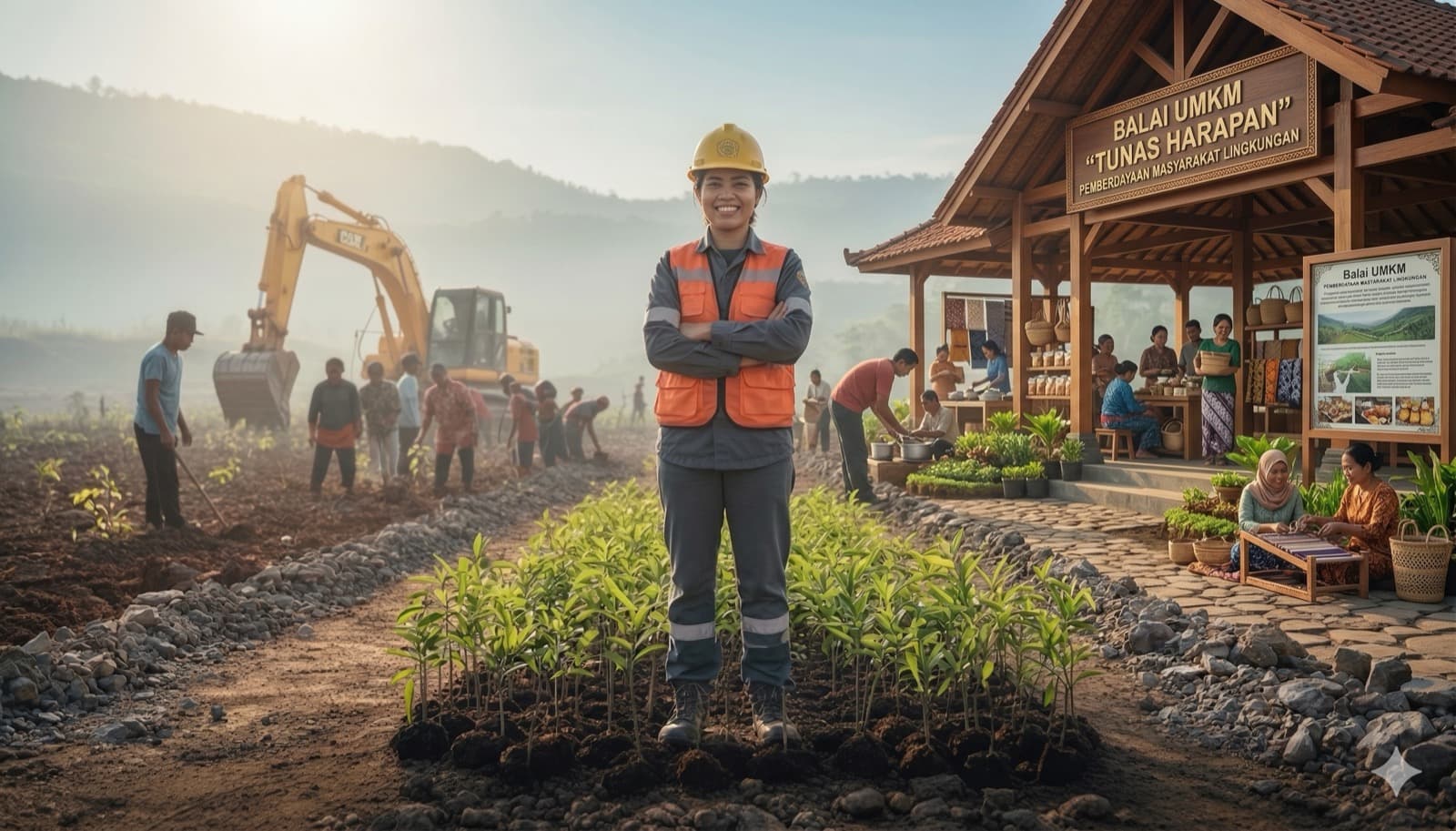
The new main mission
Indonesia holds a uniquely powerful position in the global mineral transition. Nickel, copper, and other critical resources place the country at the center of EV and industrial supply conversations.
But 2026 is making one thing clear: the biggest threats and opportunities are no longer only underground. Regulatory pressure, environmental scrutiny, and community expectations have moved from side issue to central operating reality.
From volume-first to value-first
The 2026 nickel quota shift from the Ministry of Energy and Mineral Resources signals a strategic reduction in raw extraction volume in order to better align supply with downstream capacity.
That means mining companies can no longer lead only with production headlines. The stronger narrative now is efficiency, national policy alignment, and contribution to Indonesia’s larger downstreaming vision.
For mining brands, communication has to evolve alongside operations. If the market and regulators are moving toward value-first logic, the brand story must do the same.
Community beyond sembako
For too long, community engagement around mining sites has been treated as a transactional relationship. Short-term gestures may soften friction, but they do not create durable trust.
The more durable lesson from large operators is that social license comes from treating communities as partners in development rather than passive recipients of assistance.
- Move from philanthropy toward local procurement, resilient land use, and co-created restoration programs.
- Design engagement structures with village councils and local stakeholders so restoration outcomes are jointly owned.
- Treat community trust as strategic infrastructure, not a communications afterthought.
Beating the evil-corp image
Environmental scrutiny is not optional noise for mining brands. It is one of the central forces shaping reputation. Forest loss, NGO monitoring, and public skepticism make generic ESG language increasingly ineffective.
Examples such as ANTAM and PT Vale suggest that disclosure quality, decarbonization planning, and visible rehabilitation work can materially change perception when they are treated as operating proof rather than polished claims.
- Use radical transparency instead of defensive reporting, including public-facing progress and site-level visibility.
- Turn reclamation and biodiversity efforts into living proof, not buried PDF appendices.
- Use the channels best suited to utility and explanation, especially when the audience needs evidence rather than slogans.
Crisis management as a phygital system
When crises happen, going silent is often the worst available option. Mining organizations need an anti-silo structure where community officers, operational teams, and communications functions feed into one shared, real-time picture.
That system makes it possible to answer rumors early, ground public responses in verifiable data, and show residents that issues are being handled rather than hidden.
- Build unified dashboards that connect field intelligence with communications and stakeholder management.
- Offer grievance channels where residents can track the status of complaints and resolutions.
- Understand that trust is built in visible resolution, not just in promised prevention.
Sustainability is the new gold
Mining in 2026 is no longer judged only by what is extracted, but by what is restored and what is left behind. The strongest brands will prove that the land, the people, and the long-term ecosystem are better because they were there.
The companies that endure in the Ring of Fire will not simply be the ones with the largest drills. They will be the ones with the cleanest hands, the clearest proof, and the strongest social license to keep operating.