The Devil Wears Zara: Why 2026 is the "Great Retail Reset" for Indonesia
As thrifting gets squeezed and mass-premium players gain momentum, Indonesia’s fashion market is entering a reset where identity, convenience, and retail experience matter more than ever.
Iqbal Asseweth
Founder/Strategist at WANT.co.id
The reset begins
Indonesia’s fashion scene is entering 2026 with two realities moving at once. At the top end, global houses continue their creative reshuffles and headline-grabbing momentum. On the ground, however, the more immediate disruption is local: the crackdown on the thrifting industry has created a meaningful vacuum in how younger consumers access style, discovery, and identity.
That raises a sharp commercial question. If the old supply of secondhand discovery is getting cut off, who inherits that appetite for uniqueness, affordability, and self-expression?
From thrift culture to tech-essentialism
For years, Gen-Z has loved the thrill of finding one-off pieces in places like Pasar Senen or through informal Instagram thrift ecosystems. With stricter enforcement in 2026, that pipeline is weakening fast.
This creates space for brands like Zara and Uniqlo, but not simply because they are large. It creates space because they can combine accessibility with a sense of design logic. Zara can inject high-fashion energy into the high street, while Uniqlo continues to win through functional product systems such as Airism and LifeWear.
Once the cool factor of thrifting is harder to access, younger shoppers begin pivoting toward quiet quality and experimental basics. The brands that inherit the market will be those that deliver tech-led comfort with enough taste and design language to still feel expressive.
Retail-tainment beats plain retail
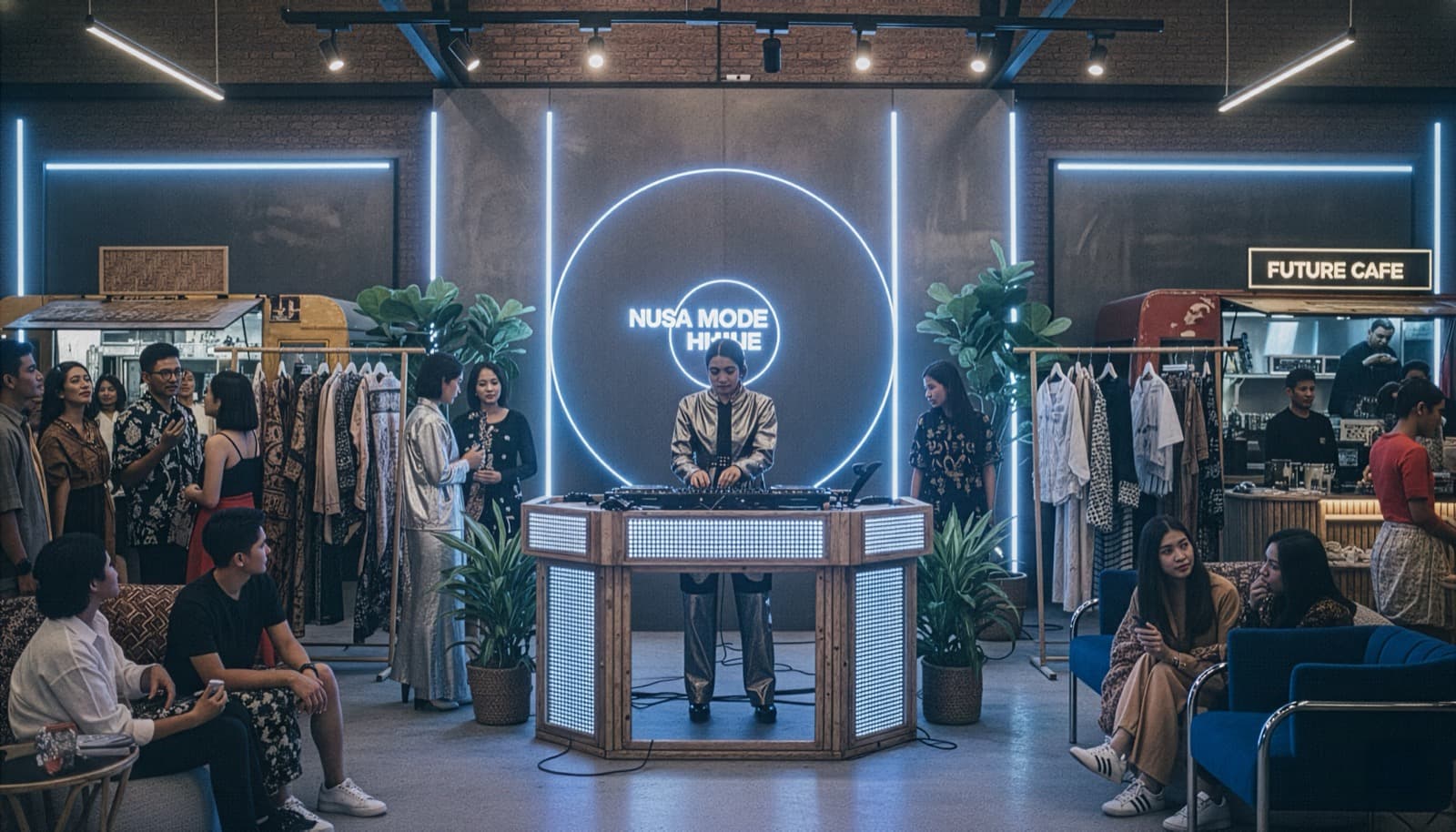
Stores can no longer operate like static warehouses with cashiers. In Jakarta and beyond, the strongest local players have already shown that a store performs better when it also behaves like a hangout destination.
Brands like Thanksinsomnia and Roughneck point toward a model where retail blends naturally with coffee, skate culture, music, and social gathering. In that world, a hoodie is not just merchandise. It is the souvenir of being somewhere culturally alive.
- Treat the store as a "third space" that increases dwell time and supports higher average transaction value.
- Borrow from the energy of events like Brightspot or Sunday Market, where shopping feels like participation in a cultural moment.
- Use modular layouts and rotating activations so the "new arrival" effect keeps renewing consumer curiosity.
The anti-silo opportunity
Large retail groups such as MAP hold an advantage many others do not: a broad brand portfolio that spans fashion, beauty, and lifestyle. But that advantage only becomes meaningful when the data across those businesses actually connects.
If a shopper buys a blazer at Zara, books a service at Sephora, and grabs coffee at Starbucks, that should not exist as three disconnected actions. It should become one visible lifestyle journey.
When those signals are unified, cross-brand predictive retail becomes possible. The system can begin recommending complementary products, suggesting next purchases, and treating consumers like full identities rather than isolated transactions.
Closing the phygital loop
The old separation between online and offline retail has become obsolete. In 2026, fashion works best when digital hype and physical trial reinforce one another.
- Use QR codes on the rack to connect shoppers to local styling content and GRWM videos for the exact piece in hand.
- Let customers reserve fitting rooms or pre-load items they have liked through social platforms.
- Design the path from inspiration to fitting room so the purchase feels like the natural next step, not a separate journey.
Retail is the stage
Indonesia’s 2026 fashion market is no longer driven by status symbols alone. It is shaped by identity, ease, and how naturally a brand fits into everyday life.
The winners will not simply be the brands with the best product assortment. They will be the brands that treat retail as a stage, customer data as creative infrastructure, and shoppers as the stars of their own main-character moment.